Pillar 01 · Article
What is a category read?
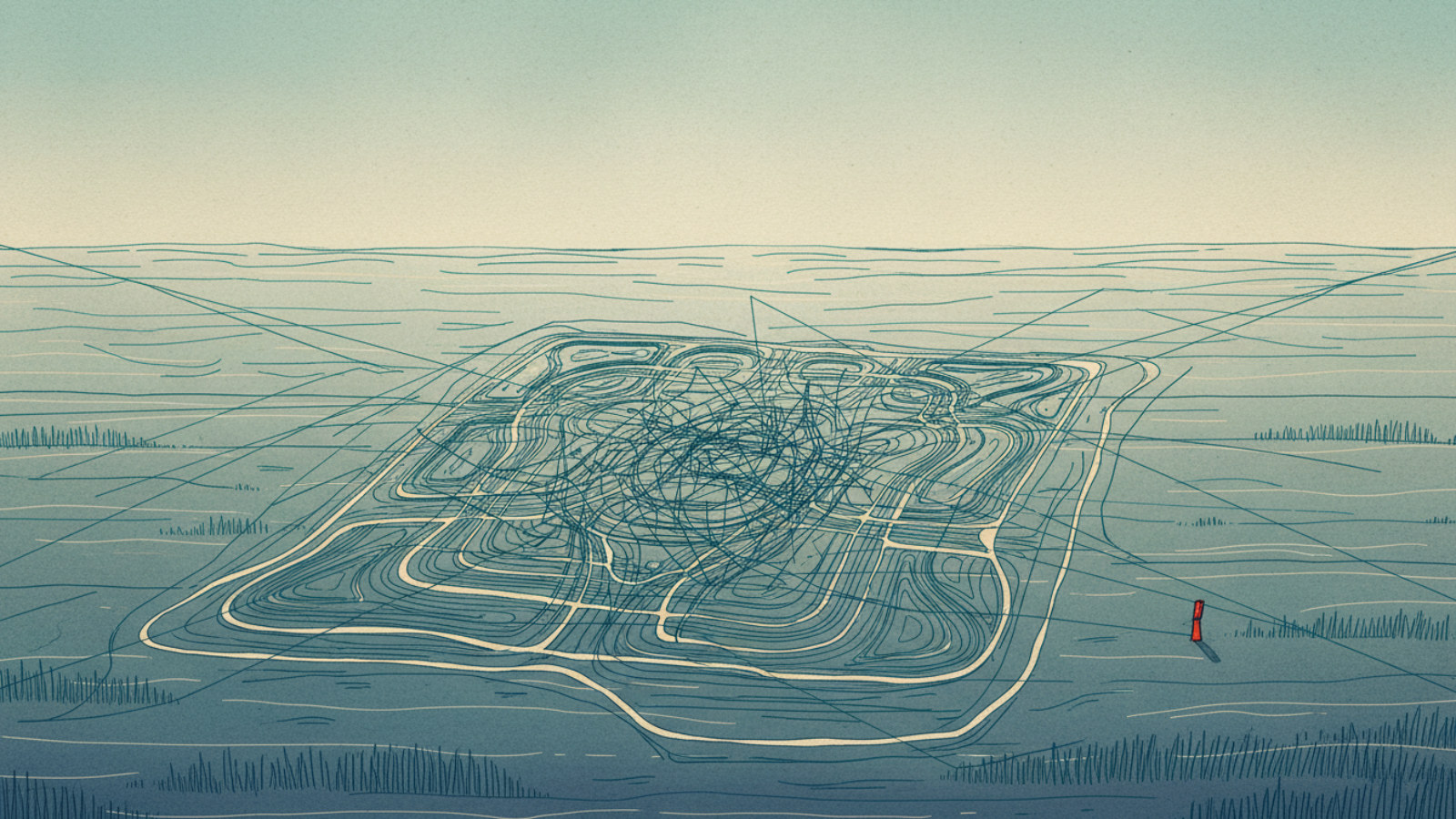
A category read is the first thing we build in any engagement. It is a point of view on where your category is heading and the position that opens up because of it, and it sits upstream of the work most teams start with: market research, competitive audits and category design. Everything that follows in the engagement plans from where the market is going.
What a category read contains.
Signals are the early, specific evidence that something is shifting in your market. Drivers are the forces underneath the signals that will decide how the shift resolves. Scenarios lay out the ways it could play out, held as a range of outcomes. The reframe names the position the read makes available as a category you could choose to compete in. Signals, drivers and scenarios are intelligence, and the reframe is what you build on.
How it differs from market research.
Market research describes the present accurately. It tells you the size of the market, the current competitors, the state of demand as it is today. A category read is future-facing and tracks the direction of travel and the gap that is forming. Research answers "what is the market right now." A category read answers "where is it going, and what position is open before everyone else can see it." Both are useful, but a go-to-market built on research alone ships into a market that has already moved. Neither one tells you how the buyer will decide once you get there. That is a separate read, and it comes from behavioral science in marketing.
How it differs from category design and product category marketing.
These are the two things the term gets confused with most often, and both sit on the far side of a decision the category read makes first. Category design is what you do after you have chosen the territory: naming the category and building the case for it. Product category marketing is a merchandising discipline, promoting a group of related products under a shared strategy. A category read comes before either one, because it decides which territory is worth claiming at all. The adjacent question, market category versus market segment, is a different cut again. A segment is a slice of buyers inside a category, while a category read asks whether the category itself is about to change shape.
It is built from foresight.
A category read is built from structured foresight. By the time a trend is visible it is already crowded, so the read works one step earlier, while the territory is still forming and the position is still open. We publish examples of the practice through Futures, so you can see the method before you commission one.
What you do with it.
The read starts the build. The position it surfaces becomes the stance you commit to, and the stance becomes the system: the repositioning, the product, the content engine, the growth infrastructure. A category read that sits in a document is a wasted read, because the point of seeing where the category is going is to get there first. That sequence, read then build, is the operating model the read sits inside.